1817 · The draisine: moving by running
On 12 June 1817, in Mannheim, the German baron Karl Drais covered a dozen kilometres on an odd wooden machine: two wheels one behind the other, a seat, and a handlebar that steered the front wheel. No pedals: you pushed off the ground with your feet, like on a child's balance bike today. He made the round trip in a little under an hour, faster than a stagecoach.
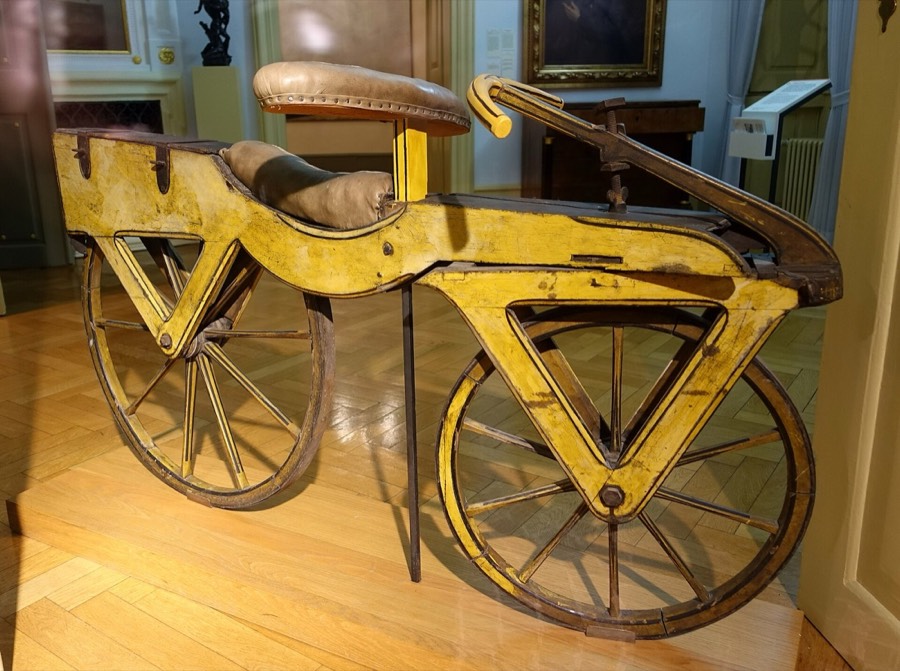
The key idea is already there: you balance on two wheels in line, steering the front one. The craze was short-lived: by the end of 1817, Mannheim banned the machines from the pavements, where they were knocking into pedestrians.
1860s · The velocipede: pedals on the front wheel
In Paris, in the workshop of the blacksmith Pierre Michaux, who made parts for horse-drawn carriages, someone fitted cranks and pedals straight onto the front axle of a draisine. The velocipede was born. Whose idea was it? The debate is still open: Michaux and his son Ernest, or their employee Pierre Lallement, who moved to the United States and filed the first American bicycle patent there in 1866. Michaux, for his part, put it into series production in the late 1860s.
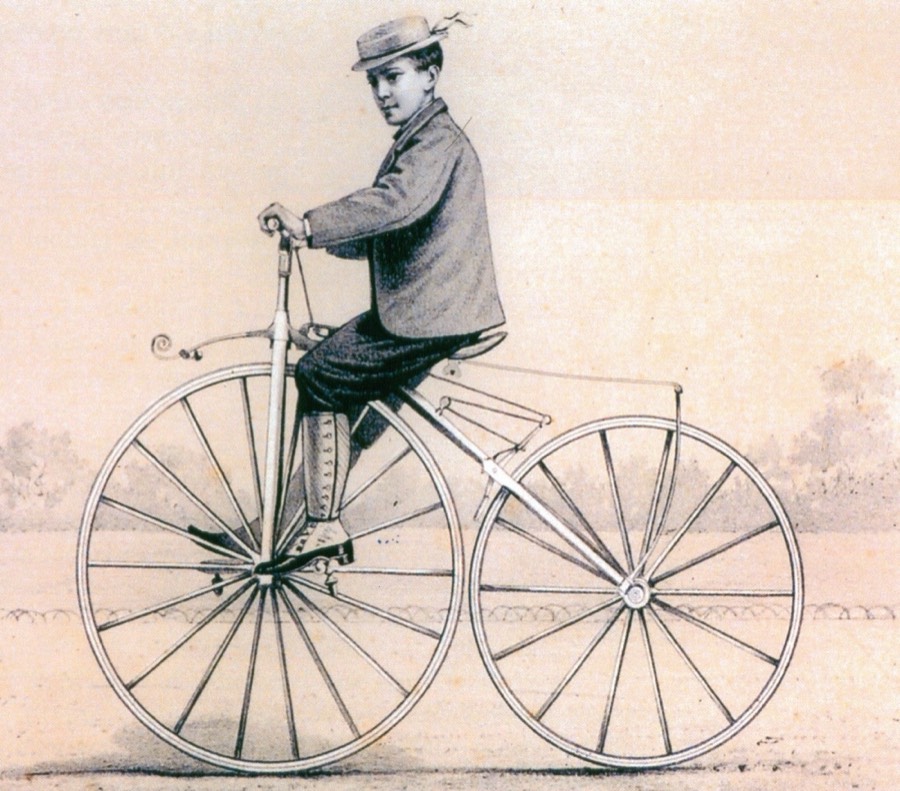
Iron frame, wooden wheels with metal rims, cobbled streets: the English soon nicknamed it the "boneshaker". But for the first time, you could move without touching the ground.
1870s-1880s · The high wheeler: a huge wheel to go fast
With the pedals fixed to the wheel, one turn of the pedals makes one turn of the wheel. To go faster, you need a bigger wheel: makers enlarged it up to the length of the rider's leg, sometimes more than 1.2 m across. Tensioned wire-spoke wheels, developed around 1869-1870 (the Parisian Eugène Meyer, the Englishman James Starley and his Ariel model), made them light and strong enough.
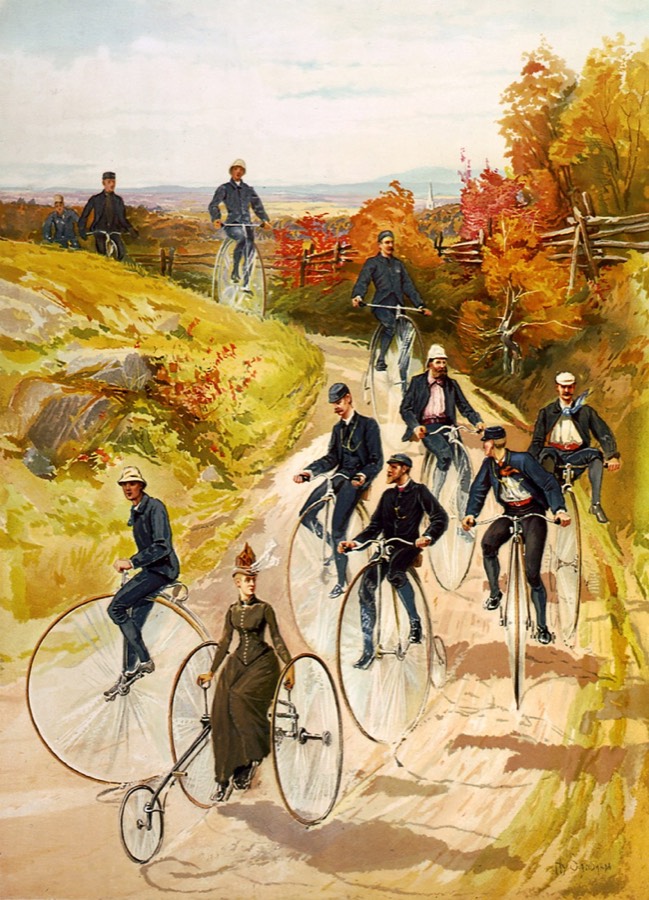
Fast, but perilous: perched high, right above the wheel, the rider went over the handlebar at the slightest obstacle. The name "penny-farthing", after two English coins of very different sizes, only came later, when people were already mocking it.
1885 · The safety bicycle: the modern bike
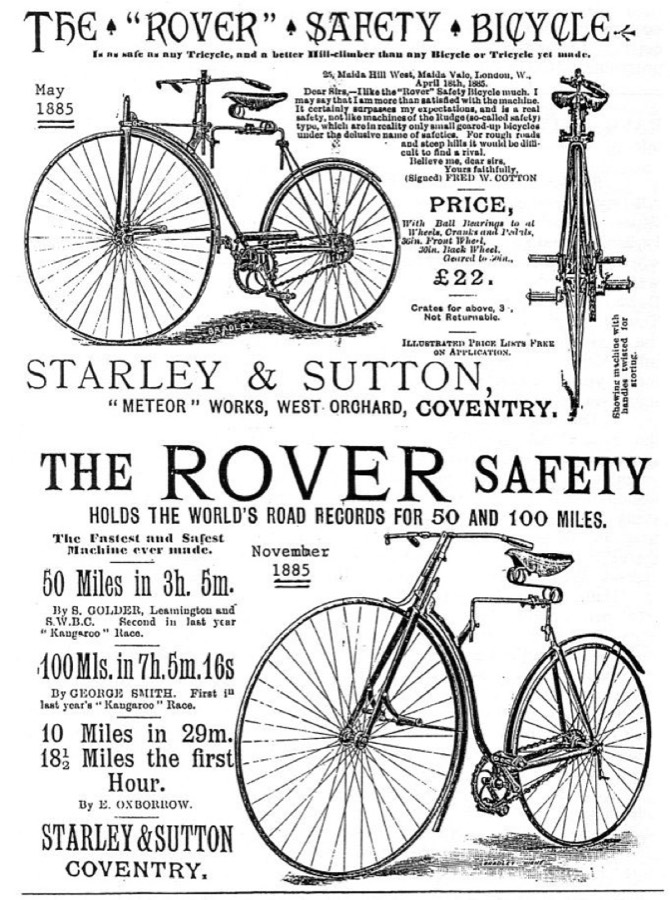
In Coventry, John Kemp Starley, James's nephew, unveiled the Rover: two wheels of similar size, the rider seated between them, and a chain driving the rear wheel. The chain changed everything: thanks to chainrings and sprockets, the wheel could turn faster than the pedals without being enormous. Historians see it as the first recognisably modern bicycle; it was called the "safety", in contrast to the high wheeler.
1888-1891 · The tyre: riding on air
In 1888, in Belfast, the Scottish vet John Boyd Dunlop patented an inflatable tyre, devised for his son's tricycle. (An 1845 patent in the name of Robert William Thomson had come first, to the point of later invalidating Dunlop's.) But this tyre was glued to the rim: a puncture took hours to fix. In 1891, the Michelin brothers, in Clermont-Ferrand, patented a detachable tyre, which they promoted that same year at the Paris-Brest-Paris race. It is the direct ancestor of the tyre you remove with two tyre levers.
1890s · The great boom, and a new freedom
With the safety bicycle and the tyre combined, the bike became comfortable, safe and ever cheaper. Between 1895 and 1899 it was a huge craze in Europe and the United States. Easier to get on than the high wheeler, the bicycle was also taken up by women, who gained a new freedom of movement and shook up fashion: divided skirts and bloomers replaced long dresses.
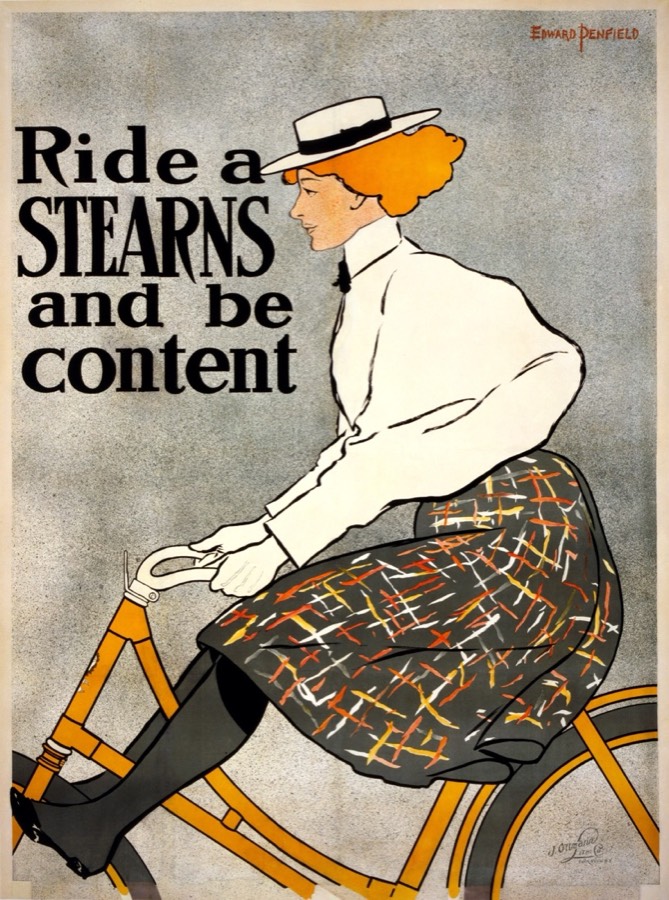
"I think it has done more to emancipate women than anything else in the world."
Susan B. Anthony, campaigner for women's suffrage, on bicycling, interviewed by the journalist Nellie Bly, New York World, 2 February 1896.
Some historians add nuance: the bicycle reflected the changes of the time as much as it caused them, and it did not, on its own, pave the way to the vote. But for many women, it was indeed a first taste of independence.
1900-1937 · Gears: hub and derailleur
In 1902, in England, the Sturmey-Archer three-speed hub was born: the gears are hidden inside the rear wheel, sheltered from the mud. It is the ancestor of the Nexus and Alfine hubs on today's city bikes. In France, in Saint-Étienne, Paul de Vivie, known as Vélocio, championed in his magazine Le Cycliste the idea of changing gear while riding, and from 1905 tested derailleurs on the mountain passes.
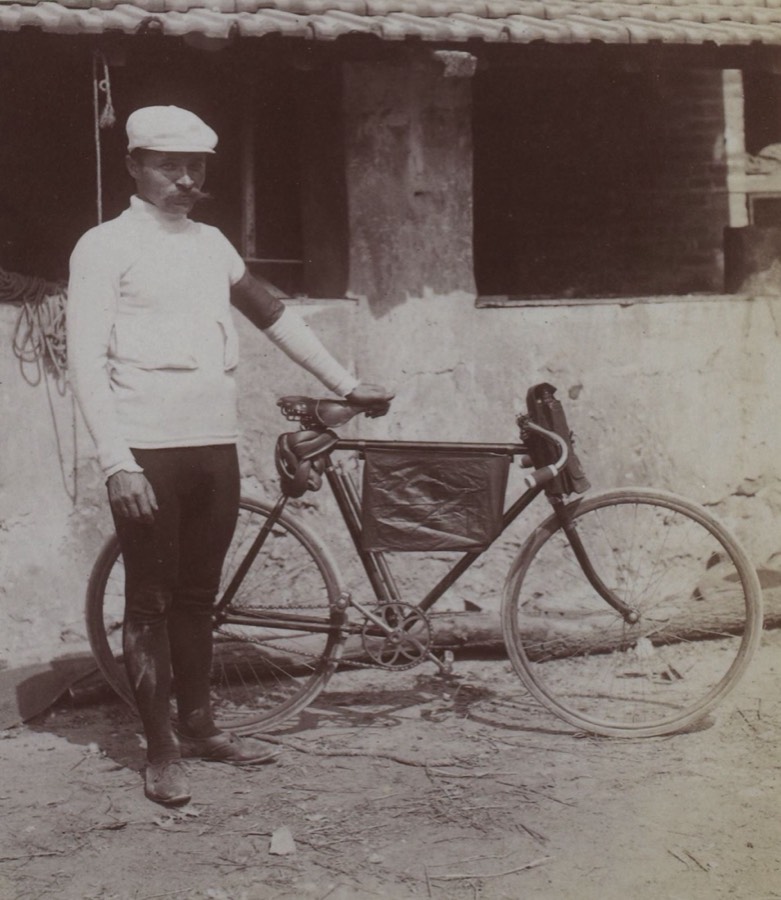
The Tour de France, created in 1903, held out for a long time: its founder Henri Desgrange opposed the derailleur, and it was only allowed in the race in 1937, under pressure from manufacturers. After the war, the Italian Campagnolo refined the parallelogram rear derailleur, from which today's are descended.
1970s · The mountain bike is born in California
In Marin County, north of San Francisco, riders hurtled down the trails of Mount Tamalpais on old bikes with fat tyres. From 1976, they held a timed race, the Repack. In 1977, Joe Breeze tried out the first frame designed specifically for off-road riding there; Gary Fisher, Charlie Kelly and the frame builder Tom Ritchey then launched the first "mountain bikes" on sale. In the early 1980s, Specialized's mass-produced Stumpjumper made them take off.
Since 1993 · Electric assistance
In 1993, Yamaha launched the PAS ("Power Assist System") in Japan: a motor helps the rider, but only while pedalling, thanks to a sensor that measures the force on the pedals. It is the principle of every e-bike today. They have opened cycling up to new journeys, longer or hillier.
Sources
The dates and facts on this page were cross-checked against the following documents:
- Encyclopædia Britannica, Bicycle: From boneshakers to bicycles
- Deutschland.de, 200 years of the bicycle (in German) and City of Mannheim, Karl Drais (in German)
- Velo, 200 years on two wheels: the first bike ride
- Wikipedia, Pierre Michaux (the Michaux – Lallement debate, after historian David V. Herlihy)
- Wikipedia, Penny-farthing and Ariel, The foundation years (1869-1900)
- Science Museum Group, Rover "Safety" Bicycle, 1885 and Grace's Guide, John Kemp Starley
- Online Bicycle Museum, The pneumatic tyre and Wikipedia, André Michelin
- Nellie Bly interviews Susan B. Anthony, 1896 (text of the interview)
- Anita Rush, a historical reassessment of the 1890s bicycle boom (academic article)
- Sheldon Brown, The Sturmey-Archer Story and Wikipedia, Sturmey-Archer
- Wikipedia, Derailleur and Velo, How the Tour de France embraced derailleurs
- Wikipedia, Repack, Joe Breeze and SFO Museum, From Repack to Rwanda
- Yamaha Motor, the story of the PAS
The images are public domain archive documents from Wikimedia Commons; the link in each caption leads to its record (author, date, licence).